

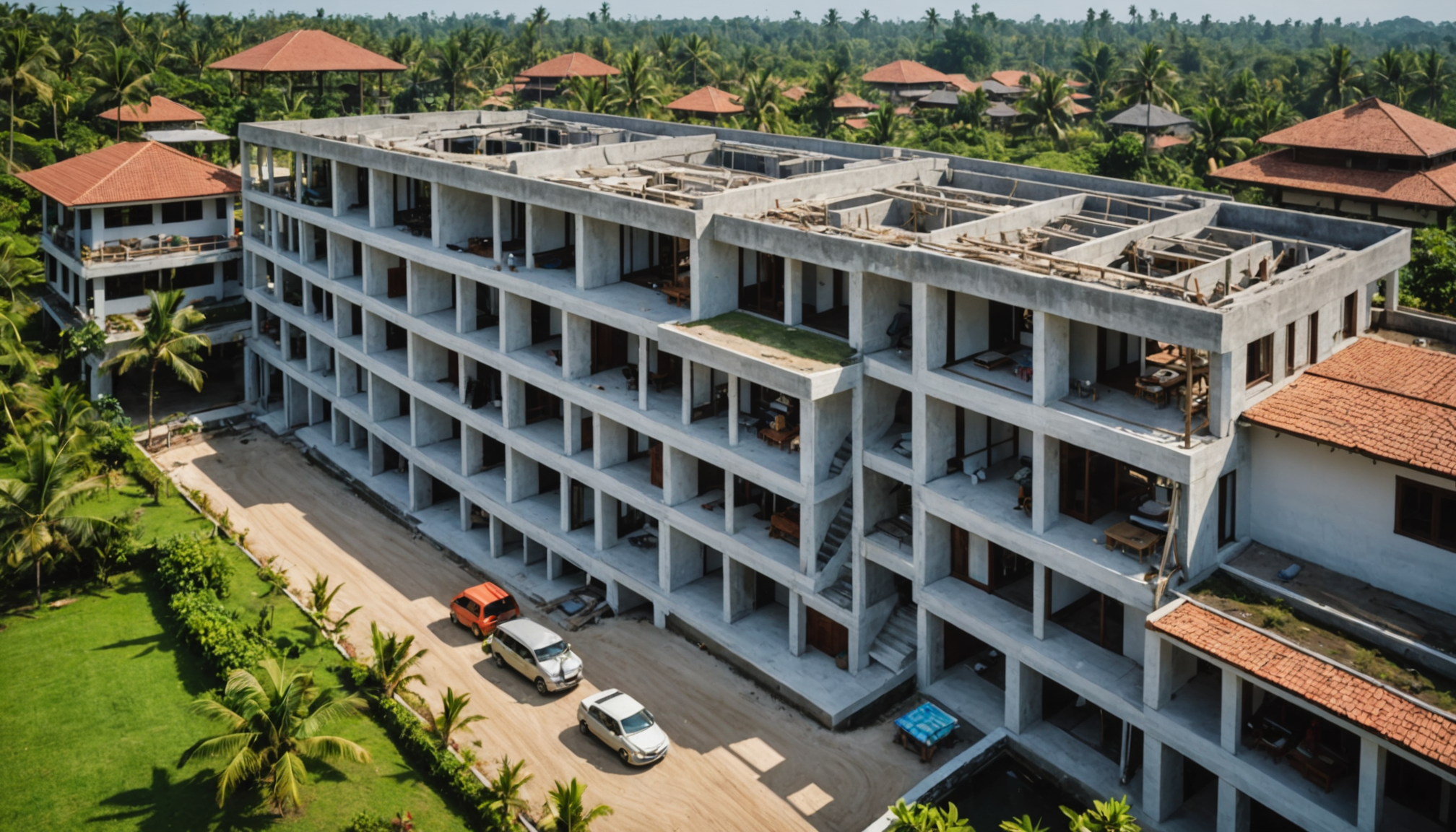
Bali remains one of the world’s most recognized tourism destinations, attracting millions of domestic and international visitors every year. The island’s tourism industry continues to evolve beyond traditional accommodation models, creating demand for luxury hotels, boutique hotels, wellness resorts, lifestyle-focused hospitality developments, eco-resorts, business hotels, and mixed-use tourism projects.
As tourism markets become increasingly competitive, hotel construction projects require far more than attractive architecture. Successful developments must combine operational efficiency, guest experience, engineering excellence, sustainability initiatives, technological innovation, and long-term asset management strategies.
Hotel construction represents one of the most complex sectors within the construction industry because it integrates hospitality operations, building engineering systems, regulatory compliance, sustainability objectives, and investment performance considerations. Developers must therefore adopt comprehensive planning approaches capable of supporting both construction success and long-term operational profitability.
This article explores the critical factors that influence successful hotel construction projects in Bali while examining the opportunities, challenges, and best practices shaping the future of hospitality development.
Industry Overview
Bali’s hospitality sector continues attracting investment from local developers, international hotel brands, private investors, hospitality operators, and institutional investment groups. Demand is supported by leisure tourism, wellness tourism, business travel, remote working trends, luxury experiences, and increasing interest in sustainable tourism.
Development opportunities exist across multiple segments including luxury beachfront resorts, boutique hotels, wellness retreats, urban hotels, eco-tourism accommodations, and mixed-use hospitality developments.
As competition increases, developers must differentiate projects through design quality, guest experiences, operational efficiency, sustainability performance, and strategic location selection.
The Evolution of Hospitality Development
Modern hotels are increasingly designed as lifestyle destinations rather than simply accommodation facilities. Guests now expect wellness amenities, digital connectivity, sustainability initiatives, personalized experiences, and immersive local cultural engagement.
Investment Opportunities
Tourism growth continues creating opportunities for hotel development across established destinations such as Nusa Dua, Seminyak, Ubud, Jimbaran, Sanur, and Canggu, as well as emerging growth areas throughout Bali.
Site Selection Considerations
Accessibility
Proximity to airports, tourism attractions, transportation networks, and supporting amenities significantly influences hotel performance.
Market Positioning
Site selection should align with target guest demographics, pricing strategies, and hospitality concepts.
Environmental Factors
Developers should evaluate topography, drainage, climate conditions, coastal influences, and environmental sensitivities before proceeding with development.
Future Area Development
Understanding regional growth plans helps identify long-term investment opportunities and potential competitive advantages.
Feasibility Studies and Hospitality Planning
Market Demand Analysis
Developers should evaluate occupancy trends, visitor demographics, tourism growth forecasts, and competitive supply.
Financial Feasibility
Investment decisions should be supported by realistic revenue projections, cost assessments, and return-on-investment analysis.
Operational Planning
Hotel operations influence room layouts, back-of-house facilities, engineering systems, staffing requirements, and guest services.
Architectural Design Strategies
Tropical Architecture Principles
Design solutions should respond to Bali’s climate through shading strategies, natural ventilation, daylight optimization, and landscape integration.
Guest Experience Design
Architectural planning should support intuitive circulation, memorable arrival experiences, privacy, comfort, and operational efficiency.
Cultural Integration
Hotels that incorporate local architectural influences often create stronger destination identities and guest experiences.
Hotel Engineering Systems
Structural Engineering
Structural systems must address seismic requirements, durability considerations, and long-term operational performance.
Mechanical Systems
HVAC infrastructure significantly influences guest comfort and energy efficiency.
Electrical Systems
Reliable electrical infrastructure supports guest rooms, operational systems, kitchens, wellness facilities, and digital technologies.
Plumbing Systems
Water supply, wastewater treatment, and conservation initiatives play critical roles in hospitality operations.
Hospitality Infrastructure Requirements
Guest Facilities
Room accommodations, restaurants, wellness facilities, meeting spaces, recreational amenities, and public areas must be carefully coordinated.
Back-of-House Operations
Service corridors, staff facilities, kitchens, laundry systems, storage areas, and maintenance infrastructure are essential for efficient operations.
Technology Infrastructure
Hotels increasingly depend on digital connectivity, property management systems, security platforms, and smart building technologies.
Sustainability Strategies
Energy Efficiency
Efficient building systems help reduce operating costs while supporting environmental objectives.
Renewable Energy Integration
Solar energy systems and other renewable technologies are becoming increasingly attractive within Bali’s hospitality sector.
Water Conservation Programs
Water-efficient technologies and wastewater reuse systems support long-term sustainability goals.
Sustainable Materials
Material selection influences lifecycle performance, maintenance requirements, and environmental impacts.
Construction Challenges
Supply Chain Complexity
Hospitality projects often require specialized materials, equipment, and finishes.
Quality Expectations
Hotels must meet high standards for aesthetics, functionality, durability, and guest comfort.
Operational Integration
Construction planning should consider future operational requirements from the earliest project stages.
Project Risks
Budget Escalation Risks
Material pricing, labor costs, and scope changes may affect project budgets.
Schedule Risks
Permitting processes, procurement challenges, and construction delays can influence project timelines.
Market Risks
Tourism demand fluctuations may affect project performance.
Operational Risks
Poor planning may negatively impact guest satisfaction and long-term profitability.
The Importance of Design Build Delivery
Hotel construction projects require close coordination among architects, engineers, hospitality consultants, contractors, project managers, operators, and investors.
Integrated design-build delivery helps align these stakeholders while improving communication, reducing risks, enhancing cost control, and supporting efficient project execution.
Organizations active within Indonesia’s hospitality construction sector, including Umira Sinergi Global, contribute to successful hotel development through engineering coordination, construction management, project delivery, and integrated design-build services tailored to hospitality projects.
Best Practices for Hotel Construction
- Conduct comprehensive feasibility studies before project initiation.
- Integrate hospitality operations into design planning.
- Prioritize sustainability and energy efficiency.
- Develop realistic budgets and schedules.
- Implement strong quality assurance procedures.
- Utilize integrated design-build delivery methods.
- Plan for long-term operational efficiency.
- Maintain proactive risk management programs.
Future Outlook
The future of hotel construction in Bali will increasingly focus on sustainability, wellness experiences, digital technologies, operational efficiency, and destination-driven hospitality concepts. Developers capable of integrating these trends into project planning and execution will be better positioned to compete within Bali’s evolving tourism market.
Conclusion
Hotel construction in Bali presents significant opportunities for investors and developers seeking exposure to one of the world’s leading tourism destinations. However, success depends on strategic planning, engineering excellence, hospitality expertise, sustainability integration, and effective project delivery.
Projects that successfully combine these elements can create valuable hospitality assets capable of delivering strong guest experiences, operational efficiency, and long-term investment performance.

Leave a Reply