
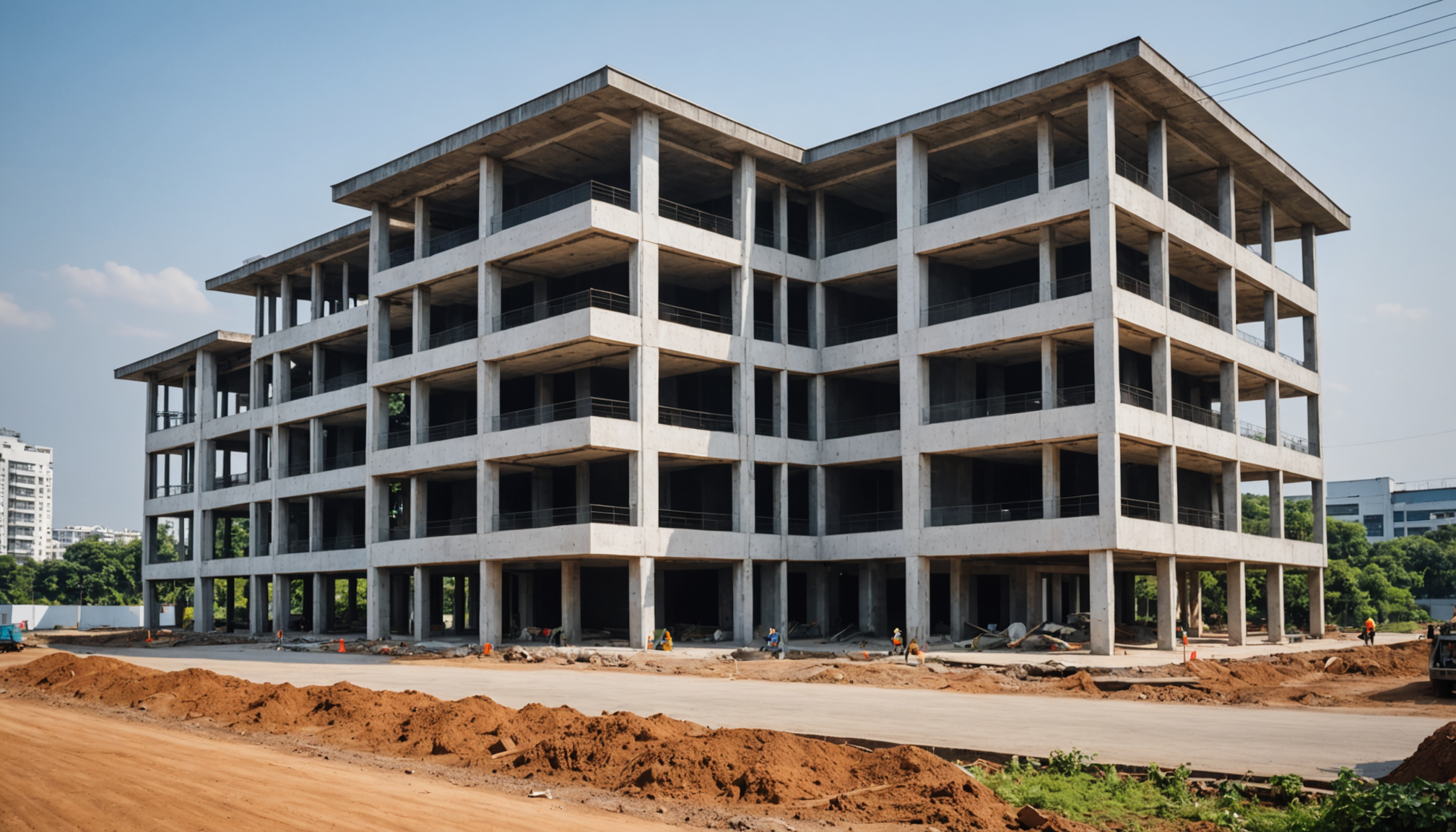
Commercial buildings are no longer viewed simply as physical assets that provide space for business activities. Today, they are strategic investments that influence operational efficiency, employee productivity, customer experience, corporate image, and long-term financial performance. Whether the project involves an office tower, retail center, hotel, medical facility, educational campus, logistics hub, or mixed-use development, every design and construction decision contributes to the success of the investment.
Indonesia continues to experience rapid urban development driven by economic growth, digital transformation, tourism, manufacturing expansion, and infrastructure improvements. Cities such as Jakarta, Surabaya, Bandung, Semarang, Yogyakarta, Medan, Makassar, Balikpapan, Batam, Denpasar, and Mataram continue attracting commercial investment, creating demand for modern buildings that are efficient, adaptable, and environmentally responsible.
Developers today face a more complex construction environment than ever before. Rising material prices, evolving building regulations, sustainability expectations, technological innovation, and changing workplace trends require projects to be planned with greater precision than in previous decades.
As a result, commercial construction has evolved beyond simply constructing buildings. It now requires integrated planning that combines architecture, engineering, project management, procurement, sustainability, digital technology, and lifecycle asset management into one coordinated strategy.
Commercial Buildings Continue Evolving
The way people work, shop, travel, receive healthcare, study, and conduct business has changed dramatically over the past decade. Buildings designed twenty years ago often require significant adaptation to remain competitive today.
Modern commercial facilities are expected to support flexible workspaces, digital infrastructure, energy efficiency, healthy indoor environments, accessibility, security, and future expansion without requiring major reconstruction.
This shift encourages developers to think beyond construction completion and instead focus on how a building will perform throughout its operational life.
Understanding Modern Commercial Construction
Commercial construction encompasses the planning, design, engineering, construction, commissioning, and handover of buildings intended primarily for business, institutional, public service, or mixed commercial activities.
Examples include:
- Corporate office buildings.
- Shopping malls and retail centers.
- Hotels and serviced apartments.
- Hospitals and healthcare facilities.
- Universities and educational campuses.
- Warehouses and logistics centers.
- Industrial support facilities.
- Mixed-use developments.
Although these facilities serve different purposes, they share one common objective: supporting efficient business operations while creating long-term economic value.
Planning Determines Project Success
Successful projects rarely begin on the construction site. They begin with strategic planning that aligns business objectives, operational requirements, technical feasibility, financial expectations, regulatory compliance, and future expansion opportunities.
Feasibility studies help developers evaluate project viability before major financial commitments are made. Market demand, site characteristics, accessibility, infrastructure availability, environmental considerations, and projected operational costs all influence investment decisions.
Decision Maker Insight: Many costly construction problems originate before design begins. Investing additional time during feasibility planning often prevents expensive revisions, schedule delays, and budget overruns during construction.
Location Influences More Than Accessibility
Site selection is frequently evaluated based on transportation access or land price alone. However, experienced developers also assess future urban development, utility capacity, drainage conditions, environmental risks, surrounding infrastructure, labor availability, and long-term commercial potential.
For example, hospitality developments in Bali require different planning priorities compared with corporate office projects in Jakarta or industrial developments in Batam.
Understanding these regional characteristics allows project teams to create buildings that respond effectively to local market conditions.
Architecture Should Support Business Objectives
Commercial architecture should balance aesthetics with functionality. Attractive buildings may strengthen brand identity, but they must also support efficient workflows, comfortable environments, flexible occupancy, maintenance accessibility, and operational efficiency.
Successful architectural planning therefore begins with understanding how the building will actually be used rather than focusing exclusively on visual appearance.
Flexible floor plans, efficient circulation, adaptable meeting areas, accessible service zones, and well-planned public spaces contribute directly to business performance.
Engineering Creates Reliable Business Infrastructure
Modern businesses depend on reliable engineering systems every day. Electrical distribution, HVAC systems, water supply, wastewater treatment, fire protection, telecommunications infrastructure, building automation, and security technologies all influence operational continuity.
Engineering should therefore be integrated into project planning rather than introduced after architectural concepts have been finalized.
This coordinated approach reduces redesign while improving long-term operational efficiency.
Sustainability Has Become a Business Requirement
Sustainability is no longer viewed solely as an environmental initiative. Many organizations recognize that efficient buildings reduce operating costs, strengthen corporate reputation, improve occupant wellbeing, and increase long-term asset value.
Energy-efficient systems, responsible water management, environmentally conscious materials, and healthy indoor environments are increasingly becoming standard expectations for commercial developments throughout Indonesia.
Developers interested in sustainable strategies can also explore our guide on Green Building Construction in Bali for Sustainable Commercial, Hospitality, Residential, and Industrial Developments.
Design-Build Simplifies Commercial Development
Traditional construction delivery often separates design consultants from construction contractors, resulting in fragmented communication and slower decision-making.
The design-build approach integrates architecture, engineering, procurement, cost planning, and construction management into one collaborative process. This allows project teams to resolve technical issues earlier while maintaining alignment between design quality, construction feasibility, and project budgets.
For a broader understanding of integrated project delivery, see Design Build Services in Bali for Integrated Construction, Better Project Outcomes, and Long-Term Investment Value.
Digital Transformation Is Reshaping Commercial Buildings
Commercial buildings are increasingly expected to support digital business operations. Reliable internet connectivity, smart access control, integrated security systems, cloud-ready infrastructure, intelligent parking management, and digital facility monitoring are becoming standard expectations rather than optional features.
Developers who prepare buildings for future digital technologies reduce the likelihood of expensive upgrades while improving long-term asset competitiveness.
Smart Building Technology Creates Operational Efficiency
Smart buildings combine engineering systems with digital technology to improve operational performance. Building Management Systems (BMS), occupancy sensors, intelligent lighting controls, predictive maintenance software, and energy monitoring platforms provide building owners with real-time operational insights.
Instead of reacting after equipment failures occur, facility managers can identify inefficiencies earlier, improving reliability while reducing maintenance costs.
Decision Maker Insight: Smart building technology should solve operational problems rather than simply add sophisticated equipment. The best solutions are those that improve efficiency, simplify maintenance, and provide measurable business value.
Cost Planning Should Consider the Entire Building Lifecycle
Construction budgets represent only one stage of commercial property investment. Operating expenses, energy consumption, maintenance, equipment replacement, insurance, renovation, and future adaptation often exceed the original construction investment over the building’s service life.
Lifecycle Cost Analysis (LCCA) enables developers to evaluate long-term financial performance before construction begins, supporting better investment decisions and reducing unexpected operational expenses.
Projects that integrate lifecycle thinking frequently achieve stronger financial returns while maintaining higher asset quality.
Procurement Influences Construction Quality
Procurement strategies affect far more than material pricing. Product quality, supplier capability, logistics planning, warranty support, lead times, spare part availability, and technical compatibility all contribute to project success.
Early procurement planning also reduces delays caused by imported materials or specialized equipment with extended manufacturing periods.
Managing Construction Risks Proactively
Every commercial development faces uncertainty. Material price fluctuations, weather conditions, labor availability, supply chain disruption, design modifications, regulatory requirements, and changing client expectations all influence project delivery.
Rather than reacting after problems occur, experienced project teams identify potential risks during planning and establish mitigation strategies before construction begins.
This proactive approach protects project schedules while improving budget certainty and construction quality.
Commissioning Completes the Construction Process
Completing construction does not automatically mean a commercial building is ready for occupancy. Commissioning verifies that mechanical systems, electrical infrastructure, plumbing, fire protection, building automation, elevators, communications systems, and safety equipment all operate according to design intent.
Comprehensive commissioning reduces operational disruptions while supporting a smoother transition from construction to daily building operations.
Preparing Buildings for Long-Term Facility Management
Commercial properties should be designed with future operations in mind. Maintenance access, equipment replacement planning, digital documentation, operation manuals, preventive maintenance schedules, and spare parts management all contribute to efficient facility management.
Buildings that simplify maintenance generally experience lower operational costs while maintaining higher levels of reliability throughout their lifecycle.
Emerging Trends in Commercial Construction
Several industry trends continue influencing commercial developments across Indonesia.
- Flexible workplace design supporting hybrid working models.
- Greater adoption of green building principles.
- Smart building integration through IoT technologies.
- Renewable energy adoption and energy resilience.
- Healthy indoor environmental quality.
- Data-driven facility management.
- Resilient building design responding to climate challenges.
- Higher demand for integrated design-build delivery.
Developers who anticipate these trends today are more likely to create commercial assets capable of remaining competitive for decades.
Consultant Perspective
One of the most common misconceptions among project owners is assuming that construction quality alone determines project success. In practice, successful commercial developments result from thousands of coordinated decisions made long before construction begins.
Project feasibility, design coordination, engineering integration, procurement planning, financial management, commissioning, and operational readiness all contribute equally to long-term investment performance. Construction should therefore be viewed as the implementation phase of a much broader strategic planning process.
The Value of an Integrated Design-Build Partner
Modern commercial developments require collaboration between architects, engineers, quantity surveyors, procurement specialists, sustainability consultants, project managers, and construction professionals. When these disciplines operate independently, communication gaps frequently increase project risk.
An integrated design-build approach brings these specialists together under one coordinated management structure, improving decision-making while reducing unnecessary delays and design conflicts.
Umira Sinergi Global applies this collaborative methodology by integrating planning, architectural design, structural engineering, MEP coordination, procurement management, construction supervision, commissioning, and project delivery into one unified process. This enables clients to develop commercial buildings that support operational efficiency, sustainability, adaptability, and long-term investment value.
Commercial Buildings Should Continue Creating Value
The most successful commercial buildings continue delivering value long after construction has finished. They operate efficiently, adapt to changing business requirements, provide comfortable environments for occupants, minimize operational costs, and remain attractive investments despite changing market conditions.
Developers who prioritize integrated planning, multidisciplinary collaboration, lifecycle thinking, and sustainable design are better positioned to create commercial properties that support business growth while contributing positively to Indonesia’s evolving built environment.

Leave a Reply