
The construction industry is undergoing a significant transformation. Developers, investors, business owners, and governments are no longer evaluating buildings solely by their construction cost or architectural appearance. Modern developments are increasingly assessed by their operational efficiency, environmental impact, occupant wellbeing, resilience, and long-term financial performance.
Green building has emerged as one of the most influential approaches to modern construction because it addresses these priorities simultaneously. Rather than viewing sustainability as an optional feature, green building integrates environmental responsibility, engineering efficiency, operational excellence, and economic value into every stage of project development.
For Bali, this approach has become increasingly relevant. The island continues to experience growth in hospitality, tourism, residential communities, commercial developments, educational facilities, healthcare infrastructure, and mixed-use projects. These developments create opportunities to build facilities that not only support economic growth but also preserve natural resources and improve long-term operational performance.
Within an integrated design-build delivery model, sustainability is no longer treated as a final checklist before project completion. Instead, environmental considerations become part of the earliest planning discussions, influencing architectural concepts, engineering systems, material selection, procurement strategies, construction methodologies, and future building operations.
Green Building Is More Than Environmental Protection
Many people associate green buildings exclusively with solar panels or energy-efficient lighting. While these technologies certainly contribute, sustainable construction represents a far broader philosophy.
A successful green building seeks to optimize the relationship between people, buildings, technology, and the surrounding environment throughout the entire lifecycle of the project.
This includes reducing operational costs, improving indoor environmental quality, conserving natural resources, increasing asset durability, minimizing maintenance requirements, and creating healthier spaces for occupants.
Why Bali Is an Ideal Location for Green Construction
Tropical Climate Opportunities
Bali’s warm climate allows architects and engineers to maximize passive design strategies such as natural ventilation, daylight optimization, external shading systems, and landscape integration. Properly designed buildings can significantly reduce dependence on mechanical cooling while maintaining occupant comfort.
Tourism Industry Expectations
International travelers increasingly prefer hotels, resorts, villas, restaurants, and commercial destinations that demonstrate environmental responsibility. Sustainable developments often strengthen brand reputation while supporting premium market positioning.
Growing Investor Awareness
Institutional investors and private developers are paying greater attention to operational efficiency because energy consumption, water usage, maintenance costs, and lifecycle performance directly influence long-term investment returns.
Building Sustainability Begins Before Construction
One of the most common misconceptions is that sustainability can simply be added after the design has been completed. In practice, the greatest opportunities arise during conceptual planning.
Early collaboration between architects, structural engineers, MEP specialists, environmental consultants, project managers, and construction professionals allows sustainability objectives to become part of the project’s foundation rather than expensive additions introduced later.
This integrated approach aligns naturally with the design-build methodology, where multidisciplinary collaboration begins from the earliest project stages.
Design Decisions That Influence Environmental Performance
Building Orientation
The position of a building relative to the sun, prevailing winds, and surrounding landscape significantly affects energy performance. Proper orientation reduces solar heat gain while improving natural daylight and ventilation.
Building Envelope Design
Walls, roofs, glazing systems, insulation, and external shading devices collectively determine how efficiently a building responds to Bali’s tropical climate.
Landscape Integration
Vegetation provides ecological value while improving microclimates, reducing surface temperatures, managing stormwater, and enhancing occupant wellbeing.
Energy Efficiency as a Long-Term Investment
Reducing energy consumption is not simply an environmental objective—it is also a financial strategy. Buildings operate for decades, meaning small improvements in annual energy performance can generate substantial savings over the life of the asset.
Efficient HVAC systems, intelligent lighting controls, high-performance glazing, occupancy sensors, renewable energy technologies, and advanced building management systems all contribute to lower operating expenses.
Decision Maker Insight: Many developers focus primarily on construction budgets while underestimating operational costs. In reality, energy expenses accumulated over twenty or thirty years may exceed the initial investment required for higher-performance building systems. Evaluating lifecycle costs rather than initial costs often leads to better investment decisions.
Water Management Is Becoming Increasingly Important
Fresh water conservation is an increasingly important consideration for developments across Bali, particularly in areas experiencing rapid tourism growth.
Sustainable water strategies may include rainwater harvesting, water-efficient fixtures, greywater recycling, landscape irrigation optimization, and wastewater treatment systems that reduce dependence on municipal supplies.
These systems not only conserve natural resources but may also reduce operating expenses throughout the building’s lifespan.
Material Selection Beyond Initial Cost
Choosing construction materials involves more than comparing purchase prices. Responsible selection also considers durability, maintenance requirements, embodied carbon, transportation distance, recyclability, local availability, and long-term environmental performance.
Whenever practical, locally sourced materials can reduce transportation impacts while supporting regional economies. Durable materials may also reduce future replacement frequency, contributing to lower lifecycle costs.
Healthy Buildings Create Better User Experiences
Green buildings are designed not only for environmental performance but also for human wellbeing. Indoor air quality, thermal comfort, acoustic performance, natural lighting, and ergonomic spatial planning all influence occupant productivity, satisfaction, and health.
Hotels benefit from improved guest comfort, offices experience higher employee productivity, healthcare facilities support patient wellbeing, while educational buildings create healthier learning environments.
The Role of Design-Build in Sustainable Construction
Traditional project delivery often separates designers from contractors, making sustainability coordination more difficult. Under the design-build approach, architects, engineers, procurement specialists, and construction managers work collaboratively to evaluate environmental performance throughout project development.
This integration helps identify practical solutions that balance sustainability objectives with construction feasibility, project budgets, and long-term operational efficiency.
Developers interested in integrated delivery can also explore our guide on Design Build Services in Bali for Integrated Construction, Better Project Outcomes, and Long-Term Investment Value.
Smart Building Technologies Strengthen Green Building Performance
Sustainability is becoming increasingly connected with digital technology. Modern green buildings no longer rely solely on passive architectural strategies but also integrate intelligent building systems capable of monitoring, analyzing, and optimizing operational performance throughout the building’s lifecycle.
Building Management Systems (BMS), smart lighting controls, occupancy sensors, intelligent HVAC controls, automated irrigation systems, and real-time energy monitoring enable facility managers to make informed operational decisions based on actual building performance rather than assumptions.
These technologies are particularly valuable for hotels, resorts, office buildings, hospitals, educational facilities, and commercial developments where operational efficiency directly influences long-term profitability.
Green Building Certification as a Competitive Advantage
Certification systems provide measurable frameworks for evaluating sustainable building performance. While certification may not be necessary for every project, many investors consider it an effective method for demonstrating environmental responsibility and improving market credibility.
LEED Certification
Leadership in Energy and Environmental Design (LEED) is widely recognized internationally and evaluates energy performance, water efficiency, materials, indoor environmental quality, and sustainable site development.
EDGE Certification
EDGE (Excellence in Design for Greater Efficiencies) focuses on practical resource efficiency by measuring reductions in energy, water, and embodied energy in construction materials.
Greenship Certification
Greenship, developed specifically for Indonesia, considers local environmental conditions while encouraging sustainable construction practices that align with national priorities.
Decision Maker Insight: Certification itself should never become the primary objective. The real objective is improving building performance. A building designed intelligently may provide substantial operational benefits even if formal certification is not pursued.
Different Building Types Require Different Sustainability Strategies
Hospitality Projects
Hotels and resorts consume significant amounts of electricity and water. Guest comfort, laundry facilities, swimming pools, kitchens, and air-conditioning systems all contribute to high operational demands. Green design strategies help reduce these expenses while supporting environmentally responsible tourism.
Luxury Villas
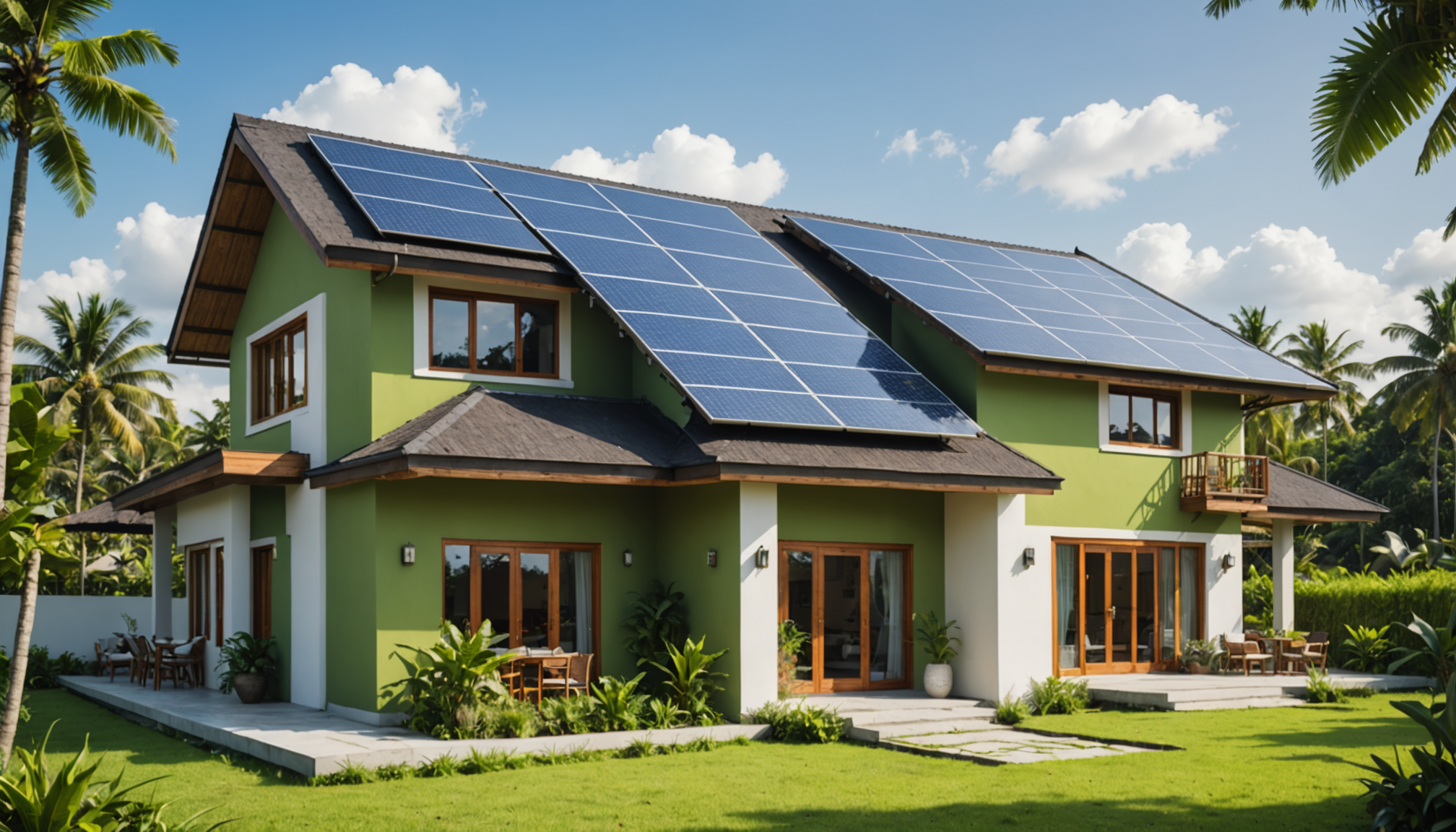
High-end residential projects increasingly incorporate natural ventilation, solar power, rainwater harvesting, native landscaping, and energy-efficient glazing to improve comfort while lowering operating costs.
Commercial Buildings
Office buildings benefit from daylight optimization, efficient mechanical systems, flexible workspaces, and smart energy management technologies that improve employee wellbeing while reducing operating expenses.
Industrial Facilities
Factories and warehouses often prioritize efficient lighting systems, natural ventilation, renewable energy integration, and optimized logistics layouts to improve productivity while minimizing energy consumption.
Economic Benefits Extend Beyond Utility Savings
One of the most overlooked advantages of green construction is its influence on long-term asset value. Buildings with lower operating expenses, healthier indoor environments, and stronger sustainability credentials frequently attract higher-quality tenants and maintain stronger market competitiveness.
Lower maintenance requirements, longer equipment life, improved occupant satisfaction, and enhanced corporate reputation all contribute to financial performance over time.
Rather than viewing sustainability as an additional expense, many experienced developers now recognize it as a strategy for protecting future investment value.
Challenges Facing Green Building Development in Indonesia
Despite increasing awareness, several practical challenges remain.
- Limited understanding of lifecycle cost analysis.
- Perception that sustainable construction always requires significantly higher capital investment.
- Availability of specialized green building materials in certain regions.
- Need for multidisciplinary coordination throughout project development.
- Limited technical experience among some project participants.
- Balancing sustainability objectives with commercial project schedules.
Fortunately, many of these challenges can be addressed through integrated planning and early collaboration between architects, engineers, contractors, and project owners.
Integrated Design-Build Makes Sustainability More Achievable
Green building projects often involve complex interactions between architecture, structural engineering, mechanical systems, renewable energy technologies, landscape design, water management, procurement, and construction sequencing.
When these disciplines operate independently, opportunities for optimization may be missed. Design-build delivery helps bring these specialists together from the beginning, allowing sustainability objectives to influence every major project decision.
This collaborative approach reduces coordination conflicts while improving cost certainty and construction efficiency.
Consultant Perspective: Where Most Projects Miss the Opportunity
Many developments attempt to improve sustainability by adding expensive technologies after the design has already been completed. In practice, the greatest opportunities usually exist much earlier.
Simple decisions regarding site planning, building orientation, façade design, natural ventilation, space planning, and engineering coordination often generate larger long-term benefits than isolated technology upgrades introduced near project completion.
Developers who prioritize integrated planning rather than isolated green features generally achieve stronger environmental and financial outcomes.
The Role of Umira Sinergi Global
Delivering a successful green building requires more than construction capability. It demands coordination between architecture, engineering, procurement, project management, sustainability planning, and construction execution.
Umira Sinergi Global adopts an integrated design-build approach that enables these disciplines to work together from project inception through final handover. This collaborative methodology helps clients develop commercial buildings, hospitality facilities, luxury residences, educational campuses, industrial facilities, and other projects that balance functionality, sustainability, operational efficiency, and long-term investment performance.
Looking Beyond Construction Completion
A truly successful green building should continue creating value decades after construction has finished. Lower operating expenses, healthier indoor environments, greater resource efficiency, stronger market positioning, and improved adaptability all contribute to the building’s ongoing performance.
Developers who embrace sustainability as a long-term business strategy rather than a short-term design trend are better positioned to create resilient assets capable of responding to changing environmental, economic, and operational demands.
Strategic Takeaways for Developers and Investors
Green building is no longer a niche concept reserved for landmark projects. It is becoming an increasingly practical approach for organizations seeking stronger investment performance, operational resilience, and responsible environmental stewardship.
For Bali and the wider Indonesian construction market, sustainable development represents an opportunity to improve competitiveness while protecting natural resources that support tourism, business growth, and community wellbeing. Through integrated planning, multidisciplinary collaboration, and lifecycle thinking, green buildings can deliver measurable value long after construction activities have concluded.

Leave a Reply