
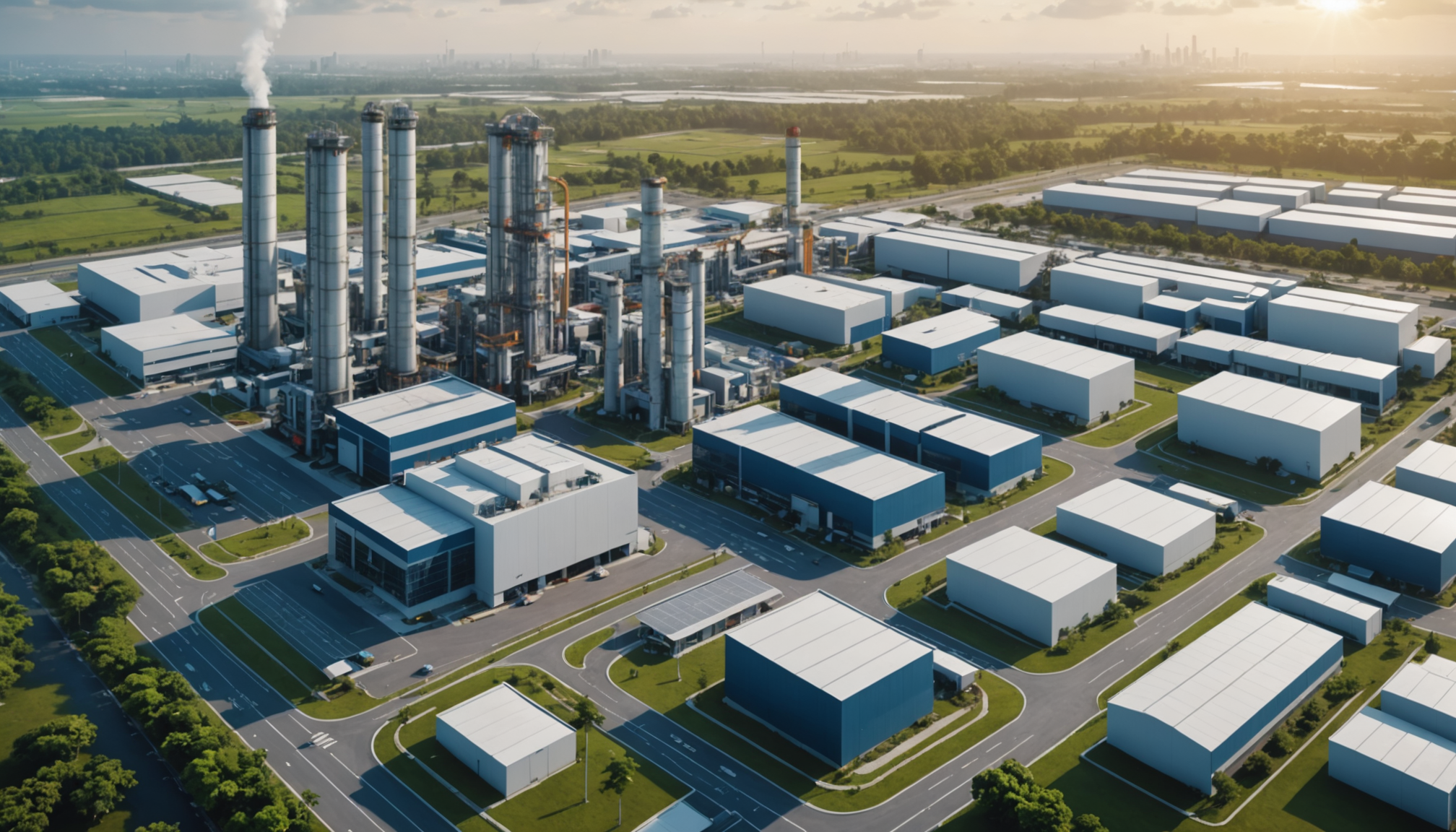
Industrial estate development is entering a new era driven by digital transformation, automation, artificial intelligence, and data-driven decision-making. Across Indonesia, industrial parks are evolving beyond traditional land development concepts into intelligent ecosystems capable of supporting advanced manufacturing, logistics optimization, sustainability initiatives, and long-term economic competitiveness.
Regions such as Batam, Jakarta, Surabaya, and West Java have already demonstrated the growing importance of technology-enabled industrial development. Meanwhile, emerging growth regions including Bali and Lombok have opportunities to integrate smart technologies from the beginning, allowing new industrial developments to avoid many of the limitations associated with legacy infrastructure.
As investors increasingly prioritize operational efficiency, sustainability, and digital readiness, industrial parks that embrace smart technologies will be better positioned to attract domestic and international businesses seeking future-ready operating environments.
For a broader understanding of industrial estate development strategies, see Industrial Estate Development Strategies in Bali and Lombok for Sustainable Economic Growth and Long-Term Investment Success.
Industry Context
Modern manufacturing facilities, logistics hubs, distribution centers, cold storage facilities, and technology-driven industries depend on reliable digital infrastructure to maintain competitiveness. Industrial park developers increasingly recognize that connectivity, automation, and intelligent infrastructure are becoming as important as roads, utilities, and land availability.
The emergence of Industry 4.0 technologies is accelerating demand for industrial environments capable of supporting connected operations, real-time monitoring, predictive maintenance, and advanced analytics.
Industrial estates that fail to adapt to these changes may face challenges attracting tenants seeking technologically advanced facilities.
The Evolution of Smart Industrial Parks
From Traditional Estates to Digital Ecosystems
Traditional industrial parks primarily focused on land allocation and utility provision. Modern developments integrate digital technologies throughout infrastructure, operations, and management systems.
Data-Driven Operations
Real-time information allows operators and tenants to make faster and more informed decisions regarding productivity, maintenance, logistics, and resource utilization.
Integrated Infrastructure Management
Smart industrial parks utilize centralized platforms capable of monitoring infrastructure performance across multiple systems.
Industrial Internet of Things (IIoT)
Asset Monitoring
IIoT sensors continuously collect data from equipment, machinery, utility systems, and infrastructure assets.
Infrastructure Visibility
Operators gain greater visibility into energy consumption, water usage, equipment performance, and operational conditions.
Operational Efficiency Improvements
Real-time monitoring enables proactive maintenance and improved resource management.
Smart Utility Management Systems
Electrical Infrastructure Monitoring
Advanced monitoring platforms help optimize power distribution, reduce downtime risks, and improve energy efficiency.
Water Management Systems
Digital monitoring improves water usage visibility and helps identify leaks, inefficiencies, and maintenance requirements.
Wastewater Treatment Monitoring
Automated monitoring systems support environmental compliance and operational reliability.
Utility infrastructure planning is discussed further in Industrial Utility Infrastructure Planning for Manufacturing and Logistics Facilities in Bali and Lombok.
Industrial Automation Technologies
Smart Manufacturing Systems
Automation technologies improve productivity, consistency, and operational efficiency across manufacturing operations.
Automated Warehousing
Automated storage and retrieval systems improve inventory management and logistics performance.
Robotics Integration
Industrial robotics continue expanding across production, packaging, material handling, and logistics operations.
Artificial Intelligence Applications
Predictive Maintenance
Artificial intelligence helps identify equipment issues before failures occur, reducing downtime and maintenance costs.
Demand Forecasting
Machine learning technologies support forecasting related to production planning, inventory management, and logistics operations.
Operational Optimization
AI solutions improve resource allocation, workflow management, and productivity analysis.
Digital Twin Technologies
Virtual Infrastructure Models
Digital twins create real-time virtual representations of industrial assets and infrastructure systems.
Scenario Analysis
Developers and operators can evaluate future expansion plans, operational changes, and risk scenarios.
Lifecycle Asset Management
Digital twins support infrastructure planning, maintenance optimization, and long-term asset performance.
Data Centers and Connectivity Infrastructure
Fiber Optic Networks
High-speed connectivity forms the backbone of modern industrial operations.
Cloud Integration
Cloud-based platforms enable scalable data storage, analytics, and business applications.
Edge Computing Solutions
Edge computing improves response times and supports real-time industrial applications.
Smart Logistics Infrastructure
Vehicle Tracking Systems
Real-time tracking improves transportation visibility and logistics coordination.
Automated Gate Systems
Smart access control technologies improve security and reduce traffic bottlenecks.
Supply Chain Visibility
Integrated digital systems provide enhanced visibility across logistics networks.
Sustainability and Smart Infrastructure
Energy Optimization Platforms
Smart energy management systems help reduce operating costs and environmental impacts.
Renewable Energy Integration
Digital monitoring technologies improve renewable energy performance and utilization.
Carbon Management Systems
Industrial estates increasingly track emissions and sustainability performance indicators.
Cybersecurity Challenges
Infrastructure Protection
Connected systems create new cybersecurity risks that require proactive management.
Operational Technology Security
Industrial control systems must be protected against cyber threats and unauthorized access.
Data Privacy Requirements
Organizations must protect sensitive operational and commercial information.
Engineering Challenges
Technology Integration Complexity
Integrating multiple technology platforms requires careful planning and coordination.
Legacy Infrastructure Limitations
Existing facilities may require upgrades to support advanced digital technologies.
Workforce Readiness
Digital transformation initiatives often require workforce development and training programs.
Project Risks
Technology Obsolescence
Rapid innovation may shorten technology replacement cycles.
Implementation Risks
Complex digital transformation projects require careful execution and stakeholder alignment.
Cybersecurity Risks
Increasing connectivity expands potential attack surfaces.
Investment Risks
Technology investments should be aligned with long-term operational and business objectives.
The Importance of Integrated Design-Build and Technology Delivery
Successful smart industrial park development requires collaboration among engineers, technology providers, infrastructure specialists, contractors, automation experts, industrial operators, and investors.
As industrial developments across Bali, Lombok, Batam, Jakarta, Surabaya, and other Indonesian growth regions become increasingly technology-driven, integrated delivery approaches help ensure alignment between infrastructure investments and operational objectives. Organizations involved in engineering, construction, and infrastructure development, including Umira Sinergi Global, contribute to industrial ecosystem development through project coordination, technology-ready infrastructure planning, construction management, and long-term asset delivery capabilities.
Best Practices
- Develop a long-term digital transformation roadmap.
- Invest in scalable digital infrastructure.
- Prioritize cybersecurity from project inception.
- Integrate smart utility management systems.
- Support Industry 4.0 technologies.
- Develop workforce digital capabilities.
- Utilize predictive maintenance strategies.
- Continuously monitor technology performance.
Future Outlook
The future of industrial estate development in Indonesia will increasingly be shaped by automation, artificial intelligence, industrial IoT, digital twins, and smart infrastructure technologies.
Industrial parks capable of supporting these innovations will be better positioned to attract investment, improve operational efficiency, strengthen sustainability performance, and maintain long-term competitiveness in a rapidly evolving industrial landscape.
Conclusion
Smart industrial park technologies are transforming how industrial developments are planned, operated, and managed. From connected infrastructure and intelligent utility systems to automation, AI, and advanced analytics, these technologies create opportunities for greater efficiency, resilience, and sustainability.
Developers that embrace digital transformation while maintaining strong engineering and infrastructure foundations will create industrial ecosystems capable of supporting Indonesia’s future economic growth and industrial modernization.

Leave a Reply